You are early
Nothing is wrong. The record is correct and the internet has not caught up with it. There is
nothing to fix and nothing to press.
Something needs changing
The record exists, but not in the way a check can find it. This always comes with a named
reason and one specific thing to change.
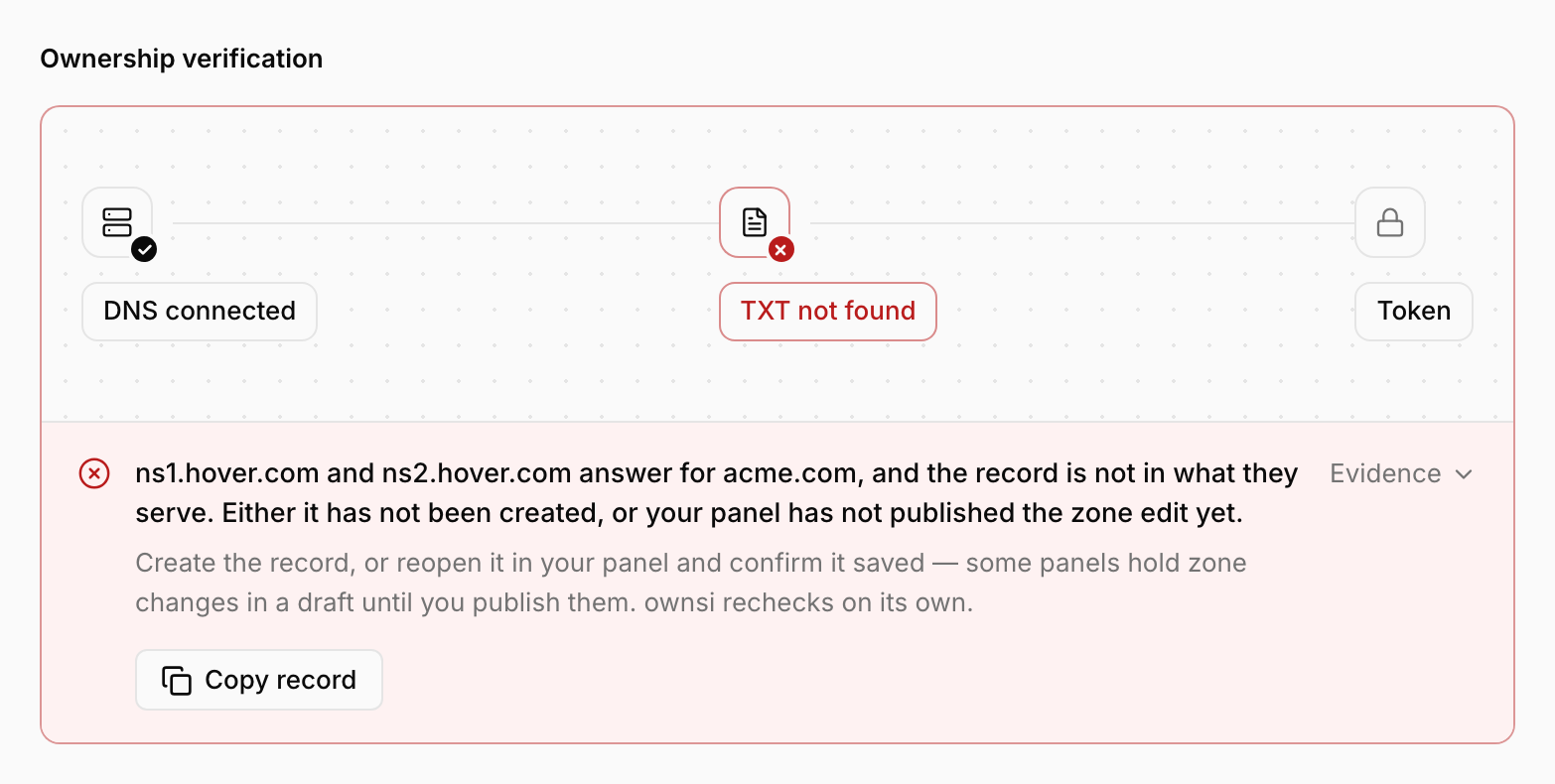
The rail says which of the three questions failed. The message under it names the cause and the one thing to change.
If you are early
DNS is not one system, it is thousands of caches, and a new record reaches them at different times. ownsi shows you a wait with a real number on it rather than “up to 72 hours”, because the two things you are waiting on can both be measured:
The second one surprises people. It is the reason a record you can see in your panel, and even see
with
dig against your own nameservers, still comes back missing everywhere else. Nothing is broken.
The clock is the fix, and ownsi tells you how much of it is left.
Pressing “check again” does not make DNS answer sooner. ownsi already knows when the wait ends and
schedules itself for then.
If something needs changing
Then ownsi names it. Every problem it can recognise has a code, one sentence saying what is actually true right now, and one sentence saying what to change — with your domain and your token in them, not a generic template. For example:The token is onThere are thirteen of these. The full list, with the cause and the fix for each, is here.acme.comitself, not on_ownsi-challenge.acme.com. Move the record to the_ownsi-challengehost and leave the records onacme.comalone.
They fall into three families
The record needs an edit
domain_appended ·
record_at_apex ·
value_formatted ·
record_on_www ·
no_matching_record · record_absent · cname_conflict · expired_tokenSomething you can fix in your panel in under a minute.Nothing to do but wait
negative_cache · not_publishedThe record is right. These are the two waits above, named.Not about your record
servfail · lame_delegation · foreign_tokenA real problem, but with your DNS provider or with another account. Retyping the record will
not help.The one that catches almost everyone
domain_appended. You typed the full name into the Host
field, and your panel added the domain to it again, so the record landed on
_ownsi-challenge.acme.com.acme.com.
Nearly every DNS panel does this. Put only _ownsi-challenge in the Host field and let the
panel add the rest — more about the record and the fields it goes in.